Unsung Psychotherapy’s therapeutic services provide support for a variety of life challenges, including
- Anxiety
- Depression
- ADHD
- OCD
- Trauma
- Tic Disorders
- Stress
- Distress related to interpersonal relationships
- Distress related to self-esteem and confidence
At Unsung, we utilize a lens of cultural affirmation. We celebrate queerness, neurodivergence, gender expression, and cultural expansiveness while also recognizing the systems that create harm.
Unsung offers a variety of therapeutic modalities, both in person and via Telehealth, to cater to each individual’s needs. We currently offer the following services:
Therapists at Unsung Psychotherapy are trained to work with individuals aged 5+.
When working with young children, caregivers are invited into every session to also support parenting practices and to provide transparency in treatment. While adolescents and teenagers receive more confidentiality, caregivers are encouraged to communicate with their child’s therapist as needed.
We also offer therapy for both couples and families. Through this service, individuals will first meet with the therapist to build rapport, followed by full group sessions.
In all situations, you and your therapist will work together to identify areas of distress, to create and check-in on treatment goals, and to determine steps in treatment.
Cognitive Behavioral Therapy (CBT) explores connections between thoughts, feelings, and behavior, with the aim to reduce distress by changing our limiting, automatic thoughts. CBT is most commonly used to treat anxiety disorders, depression, and trauma.
Eye Movement Desensitization & Reprocessing (EMDR) is an evidence-based therapeutic intervention for individuals who have experienced trauma or other distressing life experiences.
EMDR does not require talking in detail about the distressing issue nor does it require homework between sessions. EMDR is designed to resolve unprocessed traumatic memories in the brain through the use of bilateral stimulation. EMDR therapy is sometimes used in conjunction with more common talk therapies. For more information: About EMDR Therapy – EMDR International Association (emdria.org)
Acceptance and Commitment Therapy (ACT) utilizes value identification, cognitive diffusion, the practice of acceptance, mindfulness, accessing the “observing self,” and committed action to reduce distress and take meaningful steps toward contentedness.
Exposure and Response Prevention (ERP) is most commonly used to treat Obsessive Compulsive Disorder and a variety of anxiety disorders. With the support of the therapist, the client identifies areas of distress and creates a plan to gradually expose the client to areas of distress, all while practicing distress tolerance skills. ERP encourages clients to stop accommodating their OCD and to begin living with fewer limitations.
Comprehensive Behavioral Intervention for Tics (CBIT) is as it sounds: a behavioral therapy to reduce expression of tics. Instead of eliminating tics, a client receiving this treatment works toward understanding patterns in tics in order to create a competing action that reduces related distress and unwanted attention.
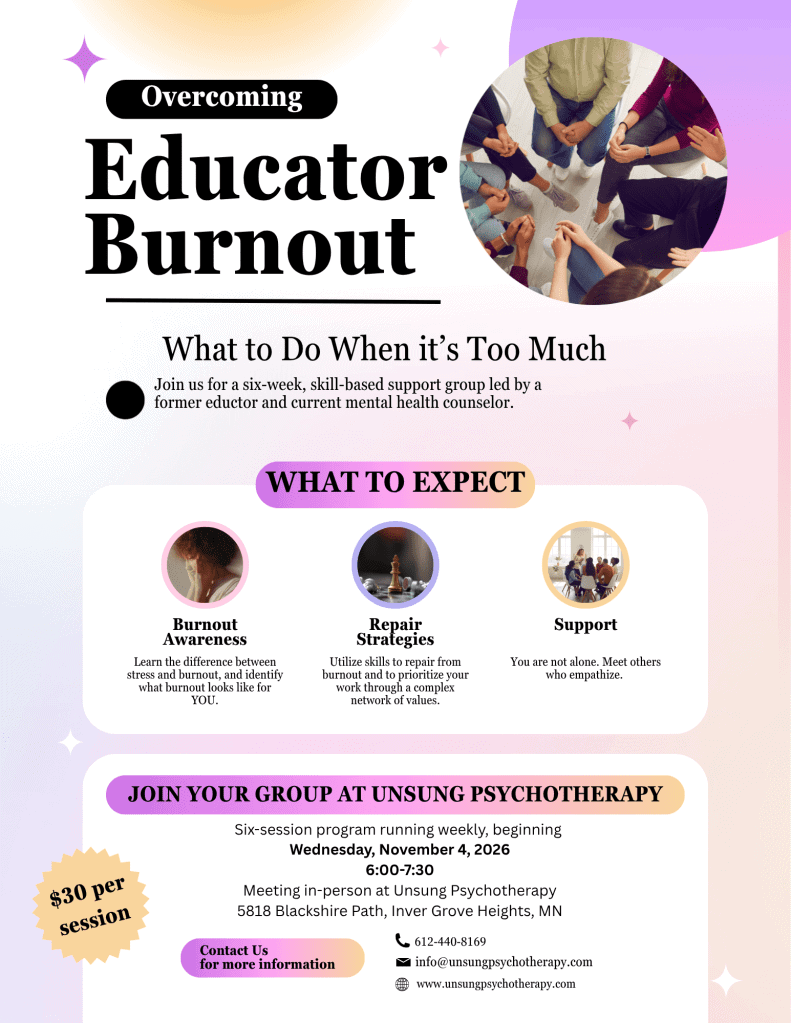
Upcoming Groups